Buying A Used School Bus - American Bus Sales
Menu
Toll Free: 866.574.9970

Why Mileage Isn’t Always the Most Important Factor When Buying a Bus

Buses

When people start shopping for a used bus, one of the first things they usually ask about is mileage. It makes sense; mileage is often one of the easiest numbers to compare when evaluating vehicles. Whether you’re buying a car, truck, or bus, a lower number on the odometer can seem like the safer choice.

But when it comes to buying a used bus, mileage doesn’t always tell the full story.

At American Bus Sales, we work with schools, churches, businesses, and transportation providers every day who are searching for reliable buses that will serve them well for years to come. One of the most common misconceptions we see is that mileage is the single most important factor when choosing a bus. In reality, several other elements often matter just as much, sometimes even more.

If you’re looking for a used bus, understanding what really affects long-term reliability can help you make a smarter purchase.


Not All Miles Are the Same

One of the biggest reasons mileage can be misleading is that not all miles put the same amount of wear on a vehicle.

For example, a bus that spent most of its life driving long highway routes may actually be in better mechanical condition than one with fewer miles that spent years driving short stop-and-go routes.

Highway driving is generally easier on engines and transmissions because the engine runs at a steady speed, there is less frequent braking and accelerating, and components experience less stress over time.

On the other hand, buses used in dense city environments or tight routes may wear more quickly due to constant stopping, turning, and idling. This is why mileage alone can’t tell you how a bus was actually used.


Maintenance History Matters More Than the Odometer

If there’s one factor that often matters more than mileage, it’s how well the bus was maintained.

A higher-mileage bus that has been regularly serviced can often be far more reliable than a lower-mileage bus that was poorly maintained.

Well-maintained buses typically have detailed service records showing:

• Regular oil changes

• Brake inspections and replacements

• Fluid checks and replacements

• Routine mechanical inspections

• Preventative maintenance

Fleet operators, such as schools and transportation companies, often follow strict maintenance schedules that keep buses running safely and efficiently for many years.

At American Bus Sales, we always encourage buyers to consider a bus’s overall maintenance history rather than focusing solely on the odometer reading.


Commercial Vehicles Are Built to Last

Another important thing to understand is that buses are commercial vehicles designed for long lifespans.

Unlike passenger cars, buses are built to handle heavy daily use and large passenger loads. Many school buses and coach buses are engineered to operate for hundreds of thousands of miles when properly maintained.

For example:

• Diesel engines in commercial buses are often designed for extended service life

• Heavy-duty transmissions are built to handle frequent operation

• Reinforced frames support long-term structural durability

Because of this, seeing a higher mileage number on a bus doesn’t necessarily mean it’s near the end of its usable life.

In fact, many buses remain reliable and productive long after reaching mileage levels that might seem high in a typical passenger vehicle.


Age Can Be Just as Important

Mileage is only one part of a vehicle’s story. Age is another factor that can affect the condition.

A bus with extremely low mileage but many years of inactivity may actually require more attention than one that has been used regularly and maintained consistently.

Vehicles that sit unused for long periods may experience issues such as:

• Dry or cracked seals and hoses

• Tire deterioration

• Fuel system problems

• Battery degradation

Regular use can actually help keep many mechanical components functioning properly.

When evaluating a used bus, it’s important to consider the overall balance of age, usage, and maintenance rather than focusing solely on mileage.


Inspection Is Key When Buying a Used Bus

Because mileage doesn’t tell the whole story, a thorough inspection is one of the most important steps in the buying process.

A quality inspection typically includes evaluating:

• Engine condition

• Transmission performance

• Brake systems

• Suspension components

• Frame integrity

• Electrical systems

• Interior condition

Professional dealers understand what to look for when evaluating a bus and can identify potential issues that might not be obvious from the odometer reading.

At American Bus Sales, every bus we sell undergoes a detailed inspection so buyers can feel confident in the condition and reliability of their purchase.


The Importance of Previous Ownership

Another factor that can influence a used bus’s condition is who owned it previously.

Buses that come from well-managed fleets often receive consistent maintenance and professional care. Schools, municipalities, and transportation companies usually follow established maintenance schedules and safety inspections.

This type of ownership history can be a positive sign, even if the bus has accumulated more mileage over time.

On the other hand, a bus that has changed hands frequently or lacks clear service records may require closer evaluation.

Understanding the bus’s background provides valuable context beyond the mileage number.


Choosing the Right Bus for Your Needs

Rather than focusing only on mileage, buyers should think about how the bus will be used and what features matter most for their situation.

For example, you may want to consider:

• Passenger capacity

• Interior layout

• Storage space

• Accessibility features

• Fuel type (diesel or gas)

• Comfort features for longer trips

A bus with slightly higher mileage may still be the best choice if it better matches your operational needs.

At American Bus Sales, we often help buyers compare multiple options so they can find the right balance between condition, functionality, and value.


Working With a Trusted Bus Dealer

Buying a used bus is a significant investment, which is why working with an experienced and reputable dealer can make a big difference.

A knowledgeable dealer can help buyers evaluate multiple bus options, understand maintenance history, identify reliable models, and avoid common purchasing mistakes.

Instead of relying solely on mileage as a decision-making tool, buyers can receive expert guidance on the overall condition and long-term value of each bus.

Our team at American Bus Sales works closely with customers to ensure they have the information they need to make confident purchasing decisions.


Looking Beyond the Numbers

Mileage is certainly one factor buyers should consider when evaluating a used bus. However, it’s only part of a much larger picture.

Factors such as maintenance history, usage type, overall condition, and previous ownership often provide a much more accurate view of a bus’s reliability.

By looking past the odometer and focusing on the complete story of the vehicle, buyers can often find excellent buses that deliver strong performance and long-term value.


Finding the Right Used Bus

If you’re searching for a quality used bus, our team at American Bus Sales is here to help. We offer a wide selection of school buses, coach buses, and commercial buses, and we take pride in helping customers find the right vehicle for their specific needs.

Our goal is to provide reliable buses, honest information, and knowledgeable support throughout the buying process.

If you’re ready to explore available inventory or want guidance on choosing the right bus, contact American Bus Sales today. Our team would be happy to answer your questions and help you find a bus that will serve your organization well for years to come.

Contact American Bus Sales today at 866.574.9970 to learn more about our buses for sale.

Contact Us
Hours: Mon-Fri 7:30AM-4:30PM
Website: https://americanbussales.net/
Phone: 866-574-9970
Address: 12802 North 103rd E Ave, Collinsville, OK 74012
Essential Questions to Ask Yourself Before Purchasing a Bus

Buses

Purchasing a bus is a significant investment, whether for a school, a business, a church group, or personal use. The process can be overwhelming due to the variety of options, features, and considerations involved. At American Bus Sales, we understand that making the right choice requires careful planning and thoughtful questioning. To help you make a confident and informed decision, here are the essential questions to ask yourself before purchasing a bus.

1. What Is the Primary Purpose of the Bus?

The first and most crucial question to consider is: What will the bus primarily be used for?

Understanding the purpose of your purchase will guide many of your decisions.

• Are you buying a bus for school transportation, charter services, or private use?

• Will it be used for long-distance travel or short commutes?

• Are you converting the bus into a mobile office or a tiny home?

For instance, if your bus is for school transportation, safety features like seat belts and advanced braking systems should be top priorities. On the other hand, a charter bus for long-distance travel might require additional comfort features such as reclining seats and onboard amenities.

2. How Many Passengers Will It Need to Accommodate?

Capacity is a vital factor when purchasing a bus. Think about the number of passengers you will regularly transport. Buses come in various sizes, from smaller 15-passenger models to full-size buses that can accommodate over 50 passengers.

If your primary use is for a sports team or a church group, a medium to large bus might be necessary. On the other hand, for smaller groups or shuttle services, a minibus may suffice. Overestimating or underestimating capacity can lead to inefficient use or overcrowding.

3. What Are Your Budget and Financing Options?

Before diving into the buying process, establish a clear budget. Buses vary significantly in price based on size, features, and whether they are new or used. Consider the following:

• What is your initial budget for the purchase?

• Will you finance the bus, lease it, or purchase it outright?

• Are you prepared for ongoing maintenance and operational costs?

At American Bus Sales, we offer flexible financing options to accommodate different budgets. Our experts can guide you through the best approach for your specific situation.

4. Should You Buy New or Used?

Both new and used buses come with their advantages and drawbacks. A new bus may offer the latest technology and warranty coverage, but it can be costly. A used bus is more affordable but may require more maintenance. Ask Yourself:

• Do you prioritize having the newest features and minimal wear?

• Are you comfortable investing in minor repairs for a used model?

• What is the bus’s resale value, and how long do you plan to keep it?

Buying from a reputable dealer like American Bus Sales ensures that even used buses are thoroughly inspected and refurbished, giving you confidence in your investment.

5. What Are the Maintenance and Operational Costs?

A bus purchase doesn’t end with the initial price. Maintenance, repairs, fuel, insurance, and registration costs can add up. Consider:

• What type of fuel does the bus use, and how fuel-efficient is it?

• Does the model require specialized maintenance?

• Are replacement parts readily available and affordable?

• How frequently will the bus be in operation?

We recommend researching the model’s reliability and typical maintenance needs. At American Bus Sales, we provide guidance on low-maintenance models and ensure our buses have been maintained prior to sale to help manage long-term costs.

6. What Safety Features Are Essential?

Safety should always be a top priority when purchasing a bus. Depending on the intended use, you may need specific safety features such as:

• Anti-lock braking systems (ABS)

• Electronic stability control

• Backup cameras

• GPS tracking systems

• Emergency exit protocols

Buses intended for school or child transport should meet stringent safety standards, including seat belts and child safety seats. Charter and transit buses might focus on passenger comfort and vehicle stability.

7. What Are the Licensing and Regulatory Requirements?

Different types of buses require specific licenses and registrations. Make sure you know:

• What class of driver’s license is needed for your bus?

• Are there local or state regulations governing bus use?

• Will the bus be subject to periodic safety inspections?

Failing to comply with these regulations can result in fines or operational delays. At American Bus Sales, we can help our customers understand licensing requirements.

8. Do You Need Any Custom Features or Modifications?

Depending on your needs, you may want to customize your bus. Consider options like:

• Wheelchair accessibility and ADA compliance

• Custom seating layouts

• Audio/visual systems for entertainment

• Wi-Fi connectivity

• Branding or custom wraps

Our customization team at American Bus Sales can work with you to ensure your bus is tailored to your specific requirements.

9. What Is the Resale Value of the Bus?

While purchasing a bus, think about its future resale value. Buses with good maintenance records, popular models, and additional features tend to retain value longer.

10. Who Will Be Driving the Bus?

Not all drivers are qualified to operate every type of bus. Consider:

• Does your team include licensed bus drivers?

• Will you need to hire or train drivers specifically for this bus?

• Are your drivers familiar with the specific model’s handling and controls?

Final Thoughts: Make Your Bus Purchase with Confidence

Purchasing a bus is a substantial commitment, but asking the right questions will set you on the path to success. At American Bus Sales, we take pride in guiding our customers through every step of the buying process. From selecting the right model to securing financing, we’re here to help you make the best choice.

Reach out to our team today for expert advice and browse our wide selection of new and used buses. Your next journey starts with the right bus, let us help you find it!

Give us a call today at 866.574.9970 or visit our website for more information! We look forward to hearing from you and getting you on the road in your dream bus!

Contact Us
Hours: Mon-Fri 7:30AM-4:30PM
Website: https://americanbussales.net/
Phone: 866-574-9970
Address: 12802 North 103rd E Ave, Collinsville, OK 74012

How To Choose the Right Bus for Your School or Organization

Choosing The Right Bus

Selecting the right bus for your school or organization is an investment in safety, efficiency, and the satisfaction of those who count on you for reliable transportation. From school administrators to transportation managers, the decision-making process requires a thoughtful understanding of your unique requirements and the offerings on the market.

The journey of choosing the ideal bus involves more than just picking a vehicle that fits your group’s size; it needs to align with your operational goals, safety standards, and financial plans. With numerous options available, the task may seem daunting, but armed with the correct information, you can navigate the process confidently.

Factors to Consider

Capacity and Size Consider how many passengers you will be transporting regularly. The size of the bus will affect maneuverability, parking, and operating costs, so be sure to choose a size that is both practical and efficient for your needs.

Safety Features When choosing a bus, it’s essential to consider safety features. This is especially crucial when transporting children or those with special needs. Some essential safety features to look for include:

• Seatbelts: Make sure the bus you choose has seatbelts for all passengers.

• Emergency exits: Buses should have multiple emergency exits for quick evacuation.

• Safety inspections: Be sure to ask about the bus’s safety inspection history before making a purchase. At American Bus Sales, we pride ourselves on offering high-quality buses that meet all safety standards. Our team thoroughly inspects each bus before it leaves our lot to ensure its safety and reliability.

Fuel Efficiency

Fuel prices can have a significant impact on operational expenses. Look for buses designed with fuel efficiency in mind or explore alternative fuels and electric models that can offer long-term savings.

Maintenance and Service

The reliability of your bus heavily depends on your ability to perform regular maintenance and service. Check for easy access to parts, service plans, and warranties.

Budget

It’s important to set a budget before beginning your search. This will help you narrow down your options and avoid overspending. Be sure to consider not only the initial cost of purchasing the bus but also the maintenance and operating costs.

At American Bus Sales, we offer a variety of financing options to help make your purchase more affordable. Our team can work with you to find a payment plan that fits within your budget.

Think About Comfort

Passengers, especially children, need to be comfortable while riding on a bus. Look for features such as air conditioning, comfortable seating, and adequate legroom. You may also want to consider amenities like WiFi or entertainment systems.

New vs. Used Buses

One of the most significant decisions you will have to make when purchasing a bus is whether to buy new or used. Both options have their pros and cons, so it’s important to weigh them carefully. A new bus may come with a higher price tag but also offers the latest technology and features. On the other hand, a used bus may be more affordable and still meet your needs, but it may require more maintenance in the long run.

Assessing Your Needs

Determining Passenger Capacity

Your primary gauge should be the number of passengers you need to transport. Ensuring comfort while maximizing capacity can enhance the travel experience for all users.

Evaluating Route Requirements

Analyze your routes to determine what type of bus is most suitable. Urban environments need a nimble, smaller vehicle, while rural routes require a sturdier bus with higher clearance.

Identifying Specific Features or Amenities

Additional features such as wheelchair lifts, storage compartments, and air conditioning can be essential for some organizations. Consider what is non-negotiable for your operations.

Researching Bus Options

There are several different types of buses to choose from, each with its own benefits and drawbacks. The most common types include:

• School Buses: These buses are designed for daily transportation and typically have a capacity of 70 passengers. They are the most economical option and often come with options for wheelchair accessibility.

• Coach Buses: Also known as charter buses, these vehicles are perfect for longer trips and have amenities such as air conditioning, reclining seats, and overhead storage. They can accommodate 25 to 60 passengers, depending on the size.

• Mini Buses: These smaller buses are ideal for organizations with fewer passengers or limited space for parking. They can hold up to 30 passengers and are often used for field trips or small group events.

• Activity Buses: These buses are specifically designed for sports teams and have additional features such as extra storage space, padded seats, and a rear door for easy loading and unloading of equipment. At American Bus Sales, we offer all of these types of buses and more, ensuring that we have the perfect option for your organization.

Comparing Different Bus Models

Once you identify a few potential models, compare their features, performance, and reviews side by side.

Reading Reviews and Testimonials

Learn from the experiences of others who have purchased and used the buses you’re considering. Reviews and testimonials can provide real-world insights.

Making the Decision

Weighing Pros and Cons

List out the advantages and disadvantages of each of your top choices. This can help clarify which bus emerges as the front-runner.

Consulting with Experts or Professionals

Speak to professionals in the bus industry or consult with peers who have faced similar decisions. Their expertise can help steer you in the right direction.

Considering Long-Term Costs and Benefits

The initial purchase price of a bus is just one aspect of the cost. Take into account the long-term costs and benefits associated with the bus’s lifecycle.

American Bus Sales

Taking the time to conduct thorough research and critically evaluate your options plays a pivotal role in informed decision-making. Remember, a bus is not just a vehicle; it’s a commitment to your community’s safety and well-being.

If you’re ready to find the perfect bus for your school or organization, don’t hesitate to contact American Bus Sales today at (866) 574-9970. We’re here to guide you through the selection process with expertise and care. Together, let’s choose the right bus for your needs! So don’t hesitate to reach out to us today to start your journey toward safe and efficient transportation. Your community deserves it!

Contact American Bus Sales

Contact Us Hours: Mon-Fri 7:30AM-4:30PM

Website: https://americanbussales.net/

Phone: 1-866-574-9970

Address: 12802 North 103rd E Ave, Collinsville, OK 74012

How To Choose the Right Bus for Your Needs

How To Choose The Right Bus

If you are a business owner or fleet manager in need of a bus, choosing the right size and type of bus to meet your specific needs is essential. Buses come in various sizes, seating capacities, and configurations, each designed for different purposes. Whether you require a shuttle bus for transporting employees, a tour bus for sightseeing, or a luxury coach for corporate events, this guide will help you navigate the selection process and make an informed decision.

1. Define Your Purpose and Passenger Capacity

The first step in choosing the right bus is to define your purpose and determine how many passengers the bus needs to accommodate. Ask yourself the following questions:

• Will the bus be used for employee transportation, airport shuttles, sightseeing tours, or special events?

• How many passengers do you need to transport at a time?

• Are there any specific requirements or amenities needed, such as wheelchair accessibility or luggage space?

For example, suppose you are looking for a bus to transport a large group of people over long distances. In that case, you may need a larger bus with more seating capacity and comfortable amenities such as reclining seats and air conditioning. On the other hand, if you only need to transport a few passengers within a small city or town, a smaller bus may suffice.

Having a clear understanding of your purpose and passenger capacity will help narrow down the size and type of bus you require.

2. Consider the Size and Configuration Options

Buses come in various lengths, widths, and configurations. Common options include:

• Minibuses: These are compact buses that typically seat between 8 and 30 passengers. They are perfect for shuttle services, airport transfers, and small-group transportation.

• Mid-size buses: These buses can accommodate around 30 to 40 passengers. They are ideal for hotel shuttles, employee transportation, and regional transport services.

• Full-size buses: Full-size buses, also known as coach buses, have a seating capacity of 40 or more passengers. They are commonly used for long-distance travel, sightseeing tours, and corporate events.

Consider the dimensions of the bus, including its length, width, and height, to ensure it fits within your operational requirements and any physical limitations, such as low bridges or narrow roads.

At American Bus Sales, we offer buses in various sizes, ranging from 15-passenger vans to full-sized coaches that can accommodate up to 55 passengers. Our knowledgeable sales team can help you determine the right size for your business needs.

3. Evaluate Fuel Efficiency and Environmental Impact

Environmental considerations are increasingly important in today’s business landscape. When selecting a bus, take into account its fuel efficiency and environmental impact. Buses powered by alternative fuels, such as propane, compressed natural gas, or electricity, can help decrease greenhouse gas emissions and reduce your business’s carbon footprint.

Additionally, assess the fuel consumption of different bus models. Buses equipped with modern, fuel-efficient engines can help minimize operating costs over the long term.

4. Assess Safety Features and Compliance

Safety should be a top priority when choosing a bus for your business. Look for buses equipped with the latest safety features, including:

• Anti-lock braking system (ABS)

• Electronic stability control (ESC)

• Advanced driver assistance systems (ADAS), such as lane departure warning and collision avoidance systems

• Fire suppression systems

It’s also essential to ensure that the selected bus meets all safety regulations and compliance standards in your region or country. This includes considerations such as ADA accessibility requirements and specific safety regulations for transporting children or elderly passengers.

5. Evaluate Comfort and Amenities

The comfort and amenities provided by the bus are crucial, especially for longer journeys or luxury transportation needs. Consider amenities such as:

• Comfortable seating with ample legroom

• Air conditioning and heating systems for temperature control

• Entertainment systems, including audio and video options

• Onboard restroom facilities for extended trips

• Wi-Fi and charging ports for passengers’ electronic devices

These features not only enhance the passenger experience but also contribute to your business’s overall satisfaction and perception.

6. Set a Budget

Before diving into the search for a bus, establish a budget that aligns with your business’s financial capabilities. Buses vary widely in price depending on their size, configuration, features, and brand. Remember to consider additional costs beyond the purchase price, such as insurance, maintenance, and operating expenses.

It’s essential to find a balance between your budget and the quality, reliability, and performance of the bus you choose. In some cases, purchasing a new bus might be the best long-term investment, while used buses can provide cost savings for those on a tighter budget.

7. Research and Test Drive

Once you have a clear understanding of your needs, it’s time to research different bus manufacturers, models, and dealers. Take the time to read reviews, check safety records, and compare specifications to find reputable brands known for producing reliable and high-quality buses.

When narrowing down your options, arrange test drives for the selected bus models. This will give you a firsthand experience of the bus’s handling, comfort, and overall performance, allowing you to make a more informed decision.

Trust American Bus Sales

Choosing the right size and type of bus for your business needs requires careful consideration and evaluation of various factors. Define your purpose and passenger capacity, assess safety features and compliance, consider fuel efficiency and environmental impact, evaluate comfort and amenities, set a budget, and conduct thorough research and test drives.

By following these steps and understanding your specific requirements, you can find a bus that meets your transportation needs and aligns with your business’s goals, values, and budget. A well-chosen bus will not only elevate the experience of your passengers but also contribute to the success and reputation of your business.

At American Bus Sales, we understand that each business has unique transportation requirements, and we are committed to finding the perfect solution for your specific needs. Contact us today to learn more about our selection of buses and how we can help you find the right fit for your business. So why wait? Visit American Bus Sales today or call 866.574.9970 and start planning your next transportation journey with confidence! Happy travels!

Contact American Bus Sales

Contact Us
Hours: Mon-Fri 7:30AM-4:30PM
Website: https://americanbussales.net/
Phone: 1-866-574-9970
Address: 12802 North 103rd E Ave, Collinsville, OK 74012

What to Look for in Your Bus Purchase

What to Look For in Your Bus Purchase

If you’re in the market for a used bus, whether it’s for personal or commercial use, there are a few things you should keep in mind before making your purchase. Buying a used bus can be a cost-effective way to get the necessary transportation, but it’s essential to research and make a well-informed decision. To help you navigate the used bus market, we’ve put together some expert tips from our team at American Bus Sales.

The Benefits of Buying a Used Bus

Before diving into what to look for and avoid when buying a used bus, let’s first discuss why buying a used one may be a smart choice. Here are some benefits of purchasing a pre-owned bus:

• Cost savings: Used buses can be significantly cheaper than brand-new ones, making them a budget-friendly option for organizations and businesses.

• Depreciation: Like any vehicle, a new bus starts to depreciate as soon as it’s driven off the lot. By buying used, you avoid this initial depreciation hit.

• Variety of options: With the constant turnover in the transportation industry, there is a wide variety of used buses available in the market. This allows you to find a bus that meets your specific needs and budget.

• Proven reliability: Used buses have been on the road for some time, allowing you to see how they perform and if there are any recurring issues. This can give you peace of mind when making your purchase.

What to Look for When Buying a Used Bus

1. Determine Your Needs

Before diving into the used bus market, it’s crucial to determine your specific needs. Ask yourself questions like:

• How many passengers will the bus need to accommodate?

• What is the primary purpose of the bus?

• Are there any specific features or amenities you require? Understanding your requirements will help you narrow down your search and make a more informed decision about the types of buses to consider.

2. Condition and Maintenance

The overall condition of a used bus is one of the most critical factors to consider. Thoroughly inspect the bus for any signs of damage, corrosion, or wear and tear. Look for rust or structural issues, both inside and outside the vehicle. Pay close attention to the engine, brakes, suspension, and tires, as these components often require significant maintenance and can be costly to repair or replace.

Additionally, check the vehicle’s maintenance records to ensure that it has been properly serviced and cared for. Regular maintenance is indicative of a bus that has been well-maintained and is less likely to have major underlying issues.

3. Mileage and Usage

Just like any used vehicle, the mileage and prior usage of a bus are crucial factors when assessing its condition. Higher mileage may indicate more wear and tear, potentially leading to increased maintenance and repairs in the near future. While mileage alone shouldn’t be a deal-breaker, it’s important to factor it into your decision-making process.

Consider the type of usage the bus has had in the past. School buses, for example, are generally subjected to strict maintenance schedules and may have experienced less wear and tear than buses used for long-distance transportation.

4. Vehicle History

Obtaining the vehicle’s history is an essential step in the used bus purchasing process. Request a comprehensive vehicle history report or consult with a reputable service provider to ensure that the bus has not been involved in any accidents or suffered significant damage.

Additionally, consider the ownership history of the bus. Multiple owners in a short period may be a red flag, indicating that previous owners may have encountered issues with the vehicle that prompted them to sell it.

5. Inspection and Testing

Never purchase a used bus without thoroughly inspecting and testing it. If you lack mechanical expertise, hiring a professional mechanic or a trusted bus inspector to evaluate the vehicle is highly recommended. They will be able to identify potential mechanical issues and provide you with an accurate assessment of the bus’s condition. During the inspection, pay attention to:

• The engine’s performance and any signs of leaks or abnormal noises.

• The transmission’s smoothness and responsiveness.

• The functionality of all electrical systems, including lights, air conditioning, and heating.

• The condition of the tires, brakes, and suspension.

• The interior condition includes seats, windows, and doors.

Taking the bus for a test drive is also crucial. This will allow you to evaluate its performance on the road, including its handling, acceleration, and braking. Pay attention to any vibrations or unusual sounds during the test drive.

6. Budget and Financing Options

Establishing a budget for your used bus purchase is crucial. Consider not just the purchase price but also ongoing costs such as insurance, fuel, maintenance, and repairs. It’s worth comparing prices across different sellers and platforms to ensure you’re getting a fair deal. If your budget is limited, consider exploring financing options. Many financial institutions offer loans specifically designed for commercial vehicles like buses. However, be sure to carefully review the terms and conditions of any financing agreement before committing.

7. Reputation and Trustworthiness of the Seller

Lastly, another essential factor to consider is the reputation and trustworthiness of the seller. Do your research whether you’re buying from a dealership or an individual. Read online reviews, ask for references, and inquire about any warranties or guarantees they offer. Buying from a reputable seller gives you peace of mind that you’re purchasing a high-quality vehicle from a reliable source.

Find the perfect used bus for your needs with these helpful tips from American Bus Sales. We have over 19 years of experience in the industry and are dedicated to offering our customers quality used buses at competitive prices. Navigating the used bus market may seem overwhelming, but by considering factors like your specific needs, inspecting the bus, evaluating its history and usage, conducting thorough inspections and tests, establishing a budget, and choosing a reputable seller, you can make a confident and informed decision. Start your search today and get ready to hit the road with a reliable and affordable used bus from American Bus Sales! Contact us now at 1-866-574-9970 to learn more about our inventory. Stay safe, and enjoy your travels!

Contact Us

Contact Us
Hours: Mon-Fri 7:30AM-4:30PM
Website: https://americanbussales.net/
Phone: 1-866-574-9970
Address: 12802 North 103rd E Ave, Collinsville, OK 74012

All About Used School Buses

Used School Buses

Buying and owning a new, shiny school bus can be tempting, right? When looking to start a fleet or replace an old, worn-down school bus, used school buses may not be the first option that comes to mind. However, buying used can be a great way to stack your fleet full of buses and can save you a lot of money.

Here is some important information about used school buses:

Why Buy Used?

Used school buses have a lot to offer. While buying new can be tempting, used school buses typically offer the same or similar features as the new buses, but at a fraction of the cost. In fact, the main reason customers opt for a used school buses is because of the cost.

Depreciation

Depreciation is the dollar amount that your asset (school bus) decreases over time due to wear or tear. As soon as the keys to your new school bus are handed over and you take it for its first drive, you start losing money. Just like with new cars, new school buses start to depreciate as soon as you take ownership. A new car or school bus depreciates so quickly because as soon as you take ownership, it becomes a used car or school bus. If you try to sell your asset, you will be competing in the used market rather than the new, and odds are, the more expensive the school bus, the more money you will lose on depreciation.

Cost

The good news is you can take advantage of depreciation in the used school bus market. Used school buses have already depreciated a healthy amount. This is one of the main reasons why used school buses are more inexpensive than new ones. When purchasing a used school bus from American Bus Sales, you can rest assured that it will be in great shape. Many used school buses have a lot of life left in them and will last for as long as you need.

Finding the Right Used School Bus

New buses do not require repairs and have longer lifespans, right? Sometimes, yes, but not always. Many used school buses are still in great shape and have plenty of life left in them, while many new school buses will encounter unforeseen problems that require repairs and replacements. This is why it is so important to know what you are looking for when buying a bus. If you are looking to save some money by buying used, here are a couple of things to keep an eye out for.

History

First and foremost, make sure to learn the history of the bus you are looking to purchase. The mileage, service history, and replacement history are all important factors to consider when buying a used school bus. Service history or an engine or transmission replacement should be documented, and a reputable dealer will be able to provide you with those documents.

Chassis

When making the decision to purchase a used school bus, examining the chassis of the bus is a crucial step. This is one of the biggest indicators of the life left on the bus. Take a look at it. Is the chassis bent? Is it rusted? A damaged or rusted chassis can end up costing you a lot of money in the long-run, so examining the frame up front will save you a headache down the road.

Body

While the shape of the chassis is a great gauge of the life left on the bus, it is also crucial to examine the body. You want to look for a bus that has a solid floor and does not have too much rust or corrosion on the body. Some surface rust here and there can be fixed and painted over, but significant rust can be a good indicator that you have a lemon on your hands. At American Bus Sales, we will partner with you to find you a quality bus. We will not sell you a bus that we would not drive ourselves

Warranties and More

While buying a used school bus does come with more risks than buying a new bus, there are steps you can take to help lessen that risk. At American Bus Sales we offer used school bus financing to help you fit your bus purchase into your budget. Additionally, we offer extended warranty options on all used school bus purchases. These will help ensure that your bus is covered down the road when problems inevitably arise.

Shopping with American Bus Sales

We know buying a new-to-you vehicle can be a daunting task. We want to help you through that process. We will partner with you in your search for a bus and will treat you as our priority. Our commitment to customer care is one of the reasons many of our customers are referred to us by past customers, and this commitment extends past the purchase decision.

American Bus Sales is proud to offer excellent extended warranty options on all used school bus purchases. Additionally, we want to service your bus like we would service our own. This means we will get your bus serviced and back on the road as soon as possible. Our expert technicians service buses in all 50 states and will get your bus back in your hands before you know it.

American Bus Sales is here for whatever you need. Whether it is a simple inquiry, desire to purchase, service request, or rental request, just give us a call at 1-866-574-9970! Our friendly team of experts can answer any questions you might have.


What You Need to Know About Purchasing a Used Bus

The average expectancy of a functioning school bus is about 12 years. However, when a bus is taken out of service, it doesn’t mean that it’s no longer useful. When you’re looking to purchase a used bus, the most important factor to consider is if it has a healthy engine. As long as the engine shows that the bus still has a lot of life left, you can begin to think about your next step! Before purchasing a used bus, let us give you a few tips that may help you to answer some of the questions you may have.

Used Buses for Sale

Know the History of the School Bus 

Like any used vehicle, you’ll want to learn a little more about its history before purchasing it. Usually, by learning more about the vehicle’s past, you can help determine the future it may have. Check the overall mileage, as well as the service history of the bus before purchasing. You should also know if your bus has had any recent repairs over the past few years to help predict the future outcome of the bus. 

You may run into a situation where your bus may have had an engine or transmission replaced, which will most likely lead to a long future with that bus. On the other hand, you may find that there are more significant problems with the transmission or brakes that may be more difficult to fix than you expected. If you purchase your bus from a reliable bus sales company, they can provide you with the insight you need to find a bus that’s right for you. 

Prices of Used Buses 

Purchasing a brand-new bus can cost up to hundreds of thousands of dollars, whereas used buses can range from $3,000 and $15,000 depending on the size you need. Most often, used buses are sold for a lower price because they will most likely need some form of repair down the line. Regardless, if you’re tight on money, purchasing a well-functioning used bus is still a great place to start. Although it may not be the long-term investment you are looking for, many used buses still serve a useful purpose for those in need and can still drive safely for years on the road. 

Keep Up with Bus Maintenance 

After purchasing a used bus, it’s important to keep up with routine maintenance checks more often than a brand-new vehicle. Once you get your bus, one of the first things you should do is to change all the fluids in the vehicle and pay close attention to the oil. For extra precaution, you can have the oil analyzed during every change to give you a better indication as to what can be happening within your bus, or to prevent problems that may come up with your bus. 

Buses for Sale

When you purchase a used bus, you should want to learn everything you can about it. Don’t be afraid to ask your bus sales company any questions you may have about buying a used bus before purchasing. Asking questions beforehand will help ensure the overall performance and safety of your bus.

Is a Used Bus a Good Investment for Me? 

There are a few reasons why someone may purchase a used school bus. Some school buses are purchased by those who wish to use them as recreational vehicles, while others are used for church, camp, activity buses, or converted for use as food trucks. Before purchasing your bus, you need to have a valid commercial driver’s license. Obtaining a license involves passing a written test, two road tests, as well as a physical. If you plan on using it for recreational purposes, make sure that you’re allowed to keep it parked at your home before purchasing it! 

Purchasing a Used Bus in Oklahoma

If you’re looking to purchase a used bus, American Bus Sales can provide you with a quality used bus. Whether you’re looking to use your bus for service or thinking about retrofitting it for RV use, you’ve come to the right place! At American Bus Sales, we offer a large variety of school buses for sale in different sizes, makes, and models to meet all of your transportation needs. Plus, we’ll even help you customize it! Contact us online or give us a call at 866-574-9970 to request a quote today!

School Bus Maintenance Tips for the Winter Months

Winters can be extremely harsh on school buses, so it requires a specialized maintenance plan for the added strain of cold air, ice, and snow. To keep your bus running efficiently throughout the entire winter, you need a specific winter maintenance plan that prevents problems unique to the season such as rust, tire slippage, or engine problems.

While it is always best to have your bus maintenance plan in place ahead of time, it is never too late to get started.

Here are a few tips to help maintain your bus throughout the bitter cold of the winter season:

  • Keep all lights, mirrors, gauges, exhaust, suspension, emergency accessories, etc., operational. A driver should not start a route if a bus problem is detected.
  • Replace any slick tires in order to maintain good traction, especially for winter driving.
  • Install new wiper blades if needed and check washer fluid levels.
  • Check the heater and the defroster unit for efficient operation.
  • Inspect the engine compartment for cracked water hoses, frayed belts, leaking water pump or radiator, etc. Replace or repair as needed to prevent potential problems.
  • Check the weather-stripping around the emergency door to prevent exhaust fumes from entering the bus.
  • Replace broken or cracked window glass and check to see that all windows close securely to protect passengers from the rain and cold.
  • Inspect fuel systems for leaks, cracked lines, loose mounting brackets, etc.
  • Check the cooling system regularly. Do not neglect this system.
  • Keep a timely record of service, repairs, or inspections done on each bus.

With these tips, you can ensure that your fleet is running efficiently throughout the season. American Bus Sales is one of the nation’s leading pre-owned school bus sales companies. Dedicated to quality and safety, American Bus Sales sells a variety of buses to suit a wide range of transit needs., American Bus Sales also specializes in maintaining used school buses. Visit our service page or call our service department at 1-866-574-9970 ext. 102 to schedule a service or maintenance check for your bus!

Maintaining Your Used School Bus

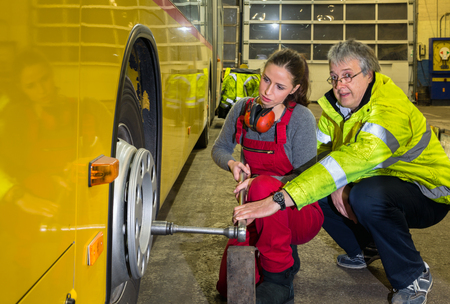
24534770 - yong woman, trainee with the master, change wheel of a buses in the work hall

A used school bus is an investment that can be used in a variety of ways. School buses are purchased for bus fleets, home conversions, food truck conversions, party buses, and more. Because most used buses are operated daily, it is imperative to be sure each bus is safe and roadworthy.  With proper maintenance, your bus will provide you many years of service, regardless of what you use it for.

If you’ve recently purchased a used bus, here are some routine maintenance checks to keep it running smoothly: 

Inspect tires – Before operating the bus, check that all tires are inflated to the proper pressures. If possible, store your bus in a garage or under a tarp when not in use. Direct sunlight and drastic temperature changes can significantly affect air pressure or even damage tires.  If you live in a particularly cold climate, checking your tire pressure regularly is even more important.  For every 10 degrees of temperature drop, the tires will drop 1-2 pounds of pressure.

Check Cooling System – It is estimated that half of premature engine failures are due to cooling system problems, but routine maintenance can help to prevent this.  It is important to check your bus’s cooling system for proper levels and water-to-antifreeze ratios at least once a month.

Regular cleaning – Routinely cleaning your bus is key to maintaining the interior. This is also a good way to discover any problems that may be occurring on your bus. Check the seats for any rips or tears, and for loose or missing hardware. You should also check that the seatbelts are working properly if equipped.  While cleaning the exterior, inspect for any other damage or areas that may need attention.

These simple tips, along with routine professional maintenance, can help keep your bus in the best possible condition and prevent unnecessary damage.

Whether you are looking for a bus for personal or business use, American Bus Sales has the one for you!  Our inventory of professionally inspected, pre-owned shuttles, school buses, and coaches are both safe and reliable. In addition to providing quality pre-owned buses, we also work to maintain them by providing a professional service department, specializing in bus repairs.  Visit our service page to see how we can help keep your fleet in tip-top shape!

How Technology Makes School Buses Safer

According to the National Highway Traffic Safety Administration, students are about 70 times more likely to get to school safely when traveling by school bus than traveling by car. Although school buses are the safest way to transport students, there are still improvements that can be made to make school buses even safer and more secure.

Here are a few technological advances that have improved safety on school buses:

Cameras

 One of the main issues regarding bus safety is drivers illegally passing the bus. This creates a dangerous situation that could ultimately result in fatalities. Some school buses have implemented cameras in the stop arm to monitor drivers and ensure that illegal passers are caught and punished. By catching people who illegally pass buses it will help decrease this occurrence and keep children safer as they get on and off the bus.

Another way cameras help to keep school buses safe is by using them to eliminate blind spots. Because school buses are such large vehicles there are a lot of instances where drivers may not be able to see children approaching the bus. Some school buses use back-up cameras, so the driver is able to have a complete view of anything behind the bus.

GPS Tracking 

In addition to cameras, GPS tracking is also being implemented on certain school buses. This helps parents keep track of buses and ensure that they arrive at the stop in time to retrieve their children from the bus stop. There are even apps that allow parents to see their child’s bus’s exact location.

WIFI

While WIFI is not a safety measure, it is a technological advancement that helps provide a better riding experience for students. With WIFI enabled school buses, students are allowed to catch up on homework, study, and do research during their ride. This can help them stay focused and possibly help reduce the number of school bus fights.

American Bus Sales is committed to providing safe and reliable buses to suit a wide range of transit needs. With customization options including audio systems, on-board WIFI, and GPS navigation there are endless possibilities for finding the perfect bus for your transportation needs. View our school bus inventory here!