Technology in Buses - Page 2 of 4 - American Bus Sales
Menu
Toll Free: 866.574.9970

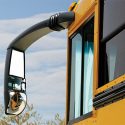
Could Cameras Fix The Problem With School Bus Mirrors?

Image source: Thomas Built Buses

Bus technology is advancing so rapidly these days. We have GPS, stop-arm cameras, interior bus surveillance equipment, and student tracking software available to school bus drivers, and there is still so much room for advancement.

Drivers still deal with regular issues and limitations of bus design that could compromise the safety of students and buses alike. One such issue is the blind spot. Drivers have lived with blind spots for as long as motor vehicles have existed but is it possible a small technological improvement could eradicate this issue altogether?

Donald West, transportation director at Harlem (III.) School District 122, recently investigated exactly that question, and it appears exactly such an innovation is closer to reality than you might think.

Find out more in West’s article for School Bus Fleet here.

Orbit Software Offers $30K School Bus Route Optimization Grant

Orbit Software, Inc.

Orbit Software, Inc. helps many school bus fleets across the U.S. optimize their routes to save money and get students home in the most safe and efficient manner. Now, they are offering a technology grant of up to $30,000 to one U.S. fleet to use their BusBoss system.

Contact Us
Hours: Mon-Fri 7:30AM-4:30PM
Website: https://americanbussales.net/
Phone: 1-866-574-9970
Address: 12802 North 103rd E Ave, Collinsville, OK 74012

Do You Support School Bus Audio Monitoring?

Technology is advancing at an ever-increasing pace. While these advancements may make our lives easier in countless ways, they also raise several important questions about privacy and safety. This is especially true for the topic of school and school bus surveillance.

Audio and video recording on school buses has the potential to increase safety in numerous ways during the daily trips to and from school, but many parents are concerned these devices may cross the line.

Video recording has stirred mild controversy in the past, but years since have led to the widespread implementation of cameras on buses. However, these devices are becoming more advanced and recent years have opened the door for improving these cameras with the ability to efficiently and affordably record audio within the bus as well.

The most common concern for parents is that bus rides serve as one of the few opportunities for students to openly socialize within the academic setting. During class, students are supposed to stay on task and talking is obviously discouraged, but the daily bus trips provide the rare chance for these students to make new friends, open up, and feel comfortable to say their thoughts around their peers.

This open opportunity to socialize also gives troublemakers ample opportunity to bully other students, which is usually verbal – not physical.

School and transportation administrators believe implementing audio recording within buses could cut down on bullying and allow more effective discipline based on the events captured. The problem is, parents are afraid recording devices could also stifle their children’s perception of the bus as a safe space to be their selves.

It is a difficult issue to navigate as both sides of the debate have reasonably concerns, but Richard Brent, CEO of Louroe Electronics, recently made a strong argument for how these recording devices can do significantly more good than harm for school buses. If you are concerned about your child’s safety and comfort on-board a school bus, Brent’s opinions may help sway your opinion in favor of school bus surveillance.

Read Richard Brent’s article here.

New App Alerts Minnesota Parents When Buses Run Late

MySPPS

A new smartphone app will make it much easier for parents in one Minnesota school district to know when their child’s school bus is running behind.

The MySPPS app recently released by St. Paul Public Schools notifies parents when school buses are running behind so they don’t have to worry when their child is not home at the normal time. The app will also be highly useful for making sure children are not left waiting in below freezing temperatures for unsafe time periods.

When drivers in the district are running late, they report that to officials in the district. The MySPPS app monitors those reports so that users are also notified when drivers call in to report running more than 10 minutes behind. It also alerts parents when buses routes are cancelled due to weather or other problems.

Users are able to add specific bus routes to their “Favorites,” and they can share any alerts or information received through the app through text messaging, email, Facebook, or Twitter.

The district will continue to post bus status information on the school district’s website.

The district distributed a brochure to help inform parents about the app, which notes that late buses can occasionally make up time later in the route so students are advised to still arrive at the bus stop at the regular time.

Why Schools Are Adding WiFi To School Buses [Infographic]

School buses are quickly being adapted to the more connected modern age by installing new technology to improve school transportation for students and parents alike. One of the ways school buses are advancing is by adding WiFi to buses so that students can be more productive on the increasingly long trips home from school. Some school districts are even using buses equipped with WiFi to provide internet to poorer students likely do not have access to high speed internet at home.

While a few districts have already taken the leap to installing WiFi in a limited number of buses, a large number of districts are still skeptical of just how beneficial the service actually is. This infographic, created by wireless internet distributor SinglePoint, shows how adding WiFi allows children to make long bus rides more productive and safe for students.

 dpI7Hwr

Pennsylvania School District Approves Audio Recording on School Buses

Recording on school buses, especially audio recording, is a controversial topic, as many parents argue it violates students’ rights to privacy. But a Pennsylvania school board has officially voted to move forward with recording sound on district school buses.

In many states, this rule would directly violate wiretapping laws, but Pennsylvania amended their law last year, giving exemptions to school districts on the ban of audio recordings.  This opened the door for State College Area School Board of Directors to approve recording of audio on school buses and other district vehicles with a 6-3 vote.

Video surveillance is already used on district buses, but audio recording features had been disabled until a decision had been made. Now, the school will re-enable audio recording capabilities. The district also put forth a specific plan for how it will use audio recordings, including:

  • Informing parents about the technology
  • Posting signs in the vehicle clearly stating the recording change
  • Accessing the audio recordings only when an incident requires investigation.

If your district has been looking into using audio recording on fleet buses, you will need to check your state laws before following the Pennsylvania district.

LED Technology Increases School Bus Visibility While Decreasing Costs

High visibility is essential to providing safe transportation for students and light-emitting diode (LED) technology has been consistently improving school bus visibility year after year. Thomas McMahon recently explored the most recent advancements in LED technology and how they can improve your fleet over at School Bus Fleet. His article highlights how you can save money and increase your fleet safety at the same time. Read the article here.

NHTSA Rule Requires New Buses Under 10,000 Pounds To Be Equipped With Rearview Camera

The National Highway Traffic Safety Administration has published a final rule to amend FMVSS to require all new vehicles weighing under 10,000 pounds GVWR, including many Type A-1 school buses, to be equipped with rear-view “backup” cameras by May 1, 2018.

NHTSA strongly showed support of the cameras, saying the new requirements provide “the most effective and cost-effective” solution to protecting children and those with disabilities.

With the passing of the rule, the title of FMVSS 111 has also been updated from “Rearview mirrors” to “rear visibility” and expands the required field of view to include a 10-foot by 20-foot zone directly behind the vehicle.

School Transportation News explains the final rule was required by the passage of the Cameron Gulbransen Kids Transportation Safety Act of 2007, named after a 2-year-old boy who was accidentally killed by his father while backing up into the family driveway.

The only vehicles which are not bound to this are motorcycles and trailers. All other vehicles, including school buses and “low-speed vehicles” must comply, as they say there is no available scientific data to support the argument that the requirements should apply to different types of vehicles.

“Backover crashes are not limited to any particular type of vehicle, and the agency is not aware of any vehicle type that categorically provides the driver with a sufficient rear field-of-view so as to avoid the types of backover incidents contemplated by Congress,” wrote NHTSA.

New Survey Shows Parents Support GPS Monitoring On School Buses

School Bus GPS Map

The discussion of GPS monitoring on school buses may have suggested the topic was rather controversial, but a new survey by Fleetmatics Group PLC shows parents are largely united in support of the new technology.

Nearly nine in 10 parents said they want closer GPS monitoring of buses and their drivers, and the majority agreed more visibility into their child’s safety aboard the bus would be beneficial.

School Transportation News suggests recent cases of school bus drivers facing DUI charges and recent crashes have raised concerns about school bus safety and parents’ concerns are reflected in the latest survey, as driver safety was number one in the areas parents said need the most improvement.

The parents who responded to the survey also said they would prefer theuse of technology to directly monitor bus drives’ safe driving and increase accountability. Key findings of the survey include:

  • 85 percent of the parents agree that “monitoring school buses via GPS tracking would make for greater overall safety and more timely bus service,” and half believe this strongly;
  • Nearly 9 in 10 (88 percent) favor “monitoring bus drivers for safe driving practices such as speeding or erratic driving,” and 62 percent strongly favor it;
  • 77 percent are interested in the “ability to monitor (their) child’s school bus’ exact location and status” (i.e., via a link on the school’s website), with 42 percent very interested; and
  • 33 percent said their school districts need to improve school bus timeliness.

Parents’ concern about the safety and whereabouts of their children when they ride the school bus is a powerful and important issue — as Havre Public Schools administrators and countless other similar Fleetmatics customers will tell you,” said Todd Ewing, the company’s director of product marketing. “Readily available technology can play an important role in giving them the peace of mind they are seeking.”

Busting Myths About Student Tracking Technology

09042012_NEWS_Back_To_School_Buses_DJB_06_display

Student tracking is often considered a highly controversial issue, especially when implemented along bus routes where students are perceived to be at higher risk than on a school campus. The problem is most of the controversy comes entirely from misunderstandings on how these systems work and the amount of safety precautions put into place before the technology is put in use.

Sonia Mastros recently discussed the most common myths about student GPS tracking and how the misunderstandings are actually leaving students at higher risk compared to those adopting the tracking technology. Let’s take a look at some of the supposed risks of student tracking and bust some myths.

1) GPS Tracking Puts Students At Risk

Many parents are concerned that schools are putting students at risk by leaving information about student locations and identity wide out in the open, but the truth is that it is not nearly as easy to gain access to that type of information as they fear. RFID technology has been around for decades and is still trusted for its low cost, reliability, and security.

When these chips are used for tracking within school systems, the microchip doesn’t hold any personal information except a student identification number. That means the only people who can locate or identify a student are parents and school administrators.

2) Student Tracking Is Too Limited To Be Useful

The ID cards that student tracking software relies on are already widely in use within most school districts. They allow students to check out library books and materials, pay for lunch, or even verify test takers. Not only does combining all of these efforts into one card make everything run more smoothly, they save money and resources along the way.

3. GPS Tracking Is Reminiscent of “Big Brother”

Student GPS tracking may sound like an invasion of privacy to some parents, but it is important to remember the ID chips contain no personal information about a student. By limiting the amount of information transmitted, it allows parents or guardians to be able to locate their child at any time while preventing others from gaining access to the information.

4. Student Tracking is Expensive

This couldn’t be further from the truth. RFID chips literally cost pennies a piece, while the student ID cards are affordable and are likely already administered to students. Out of all new student safety strategies, using RFID chips to track students is significantly cheaper and more practical than nearly any other in the field.